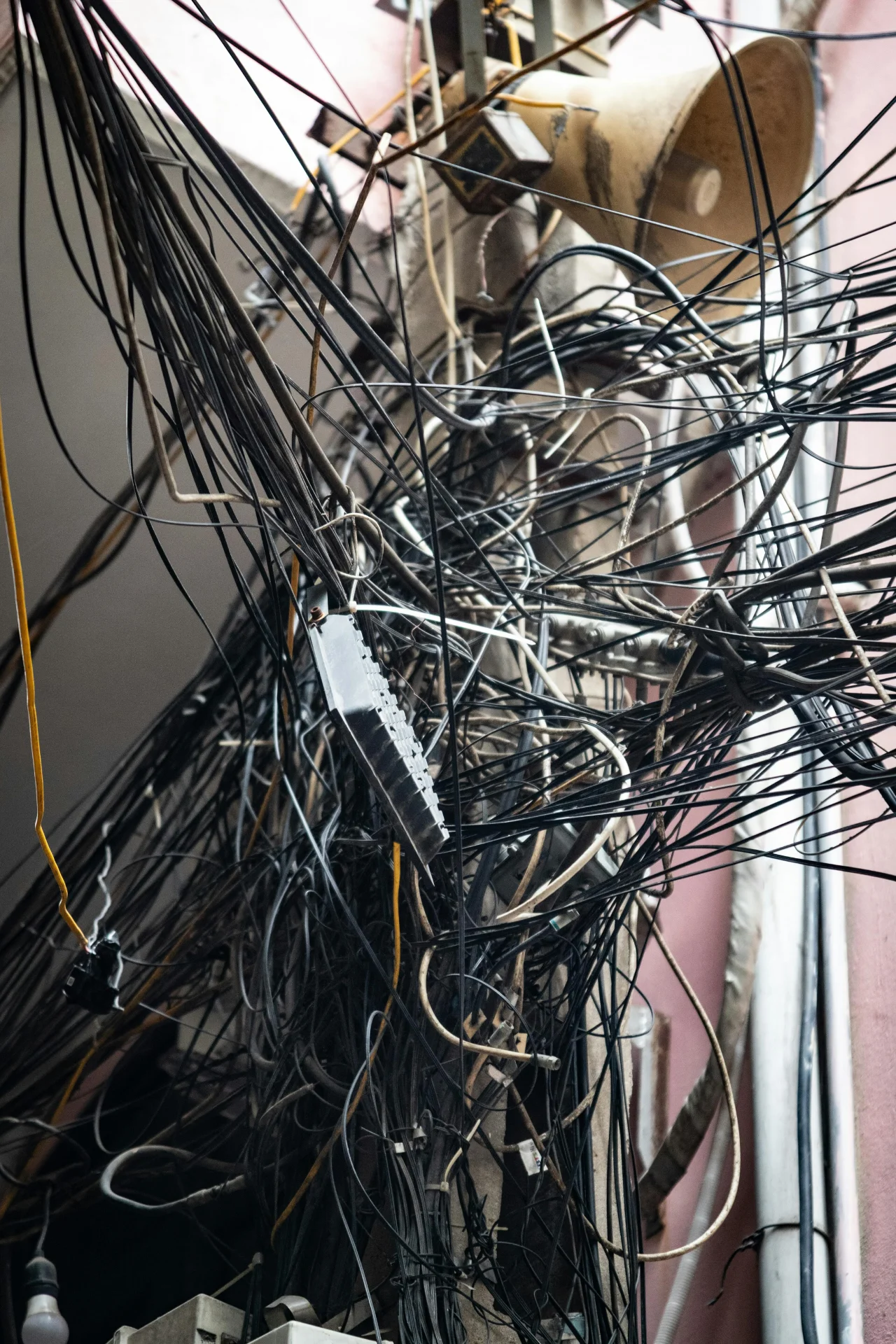
You can't bolt AI onto a mess
We’re all seeing the same things, and hearing the same conversations; in the news, at conferences, and in board meetings. AI is the future. In some cases, it’s already the present. Organisations that want to stay ahead need to be AI ready. Certainly “AI enabled” is the new “digital transformation” of industry buzzwords. AI is having a truly transformative impact on many aspects of modern life and work, and science is no exception. So of course investors and boards want to know how, when and where their companies are adopting AI, and what the “AI roadmap” looks like.
But therein lies the challenge for biotech CEOs and the scientists working for them. How do they balance the need to stay ahead of the curve against the concern that, just as not all that glitters is gold, not everything that carries the hype delivers tangible operational value.
And in fact recent publications are already reporting the end of the first wave of AI hype. A dot-ai suffix and a black-box claim about “AI empowerment” is no longer sufficient to secure either investment or customer confidence(1).
What is AI readiness?
So what does being AI ready really mean for life sciences companies? As with all things in research, it starts with the data. In most labs, data still lives in silos. Any given lab might store data across ELNs, spreadsheets, shared folders and local drives. Each team member might have their own system for recording their data and naming their files. Everyone’s results might be formatted slightly differently or organised in a slightly different way. Everyone follows the same SOP or protocol, but has their own understanding of what a “vigorous stir”, “gentle shake”, or “50% confluence” looks like. Fundamentally, in most labs, data is disconnected and non standardised.
Anyone who’s used an LLM will recognise that AI is extraordinarily capable, but that even the most capable system is only as good as the data it works from. The quality of the prompt and reference material makes a huge difference to the quality of the final output. Research applications are no different, and AI, although very clever, cannot work miracles. It can’t work with information that’s fallen through the gaps of a disconnected system, or draw meaningful conclusions from non-standardised data. Unfortunately, the common maxim “rubbish in, rubbish out” still applies.
Data structure is the cornerstone of a robust AI strategy
Over the last few years, McKinsey has published a number of reports on the state of AI and data in biotech and pharma, and these reports corroborate this conclusion. Structured and connected data foundations matter. Fragmented, unstructured, and siloed data infrastructure is a major bottleneck to scaling AI in life sciences, and the key to unlocking the potential of this technology is the creation of standardised, reusable data products(2, 3).
Even the new AI tools now arriving for scientists are built around provenance and pulling together fragmented sources, which suggests broad industry agreement on where the problem lies. But once again, an analysis workbench can only work with the data you feed it; it can’t connect your samples, sequences and experiments in the first place. That's the foundation, and it has to exist before any tool, however capable, can make the most of it.
This is exactly what Lab Thread is built for: a single platform connecting experimental design, lab processes, ELN records and physical sample storage, designed around the reality that research is a project and needs to be managed as such. That connected foundation is the cornerstone of any credible AI strategy. But it earns its place long before any AI arrives: the same structure that makes your data ready for AI tomorrow makes it resilient to staff turnover, audits and investor scrutiny today.
Are you ready to standardise your data structure?
References
- What’s actually hot in the new era of post-hype techbio? EU StartUps. June 2026. https://www.eu-startups.com/2026/06/whats-actually-hot-in-the-new-era-of-post-hype-techbio/
- Boosting biopharma R&D performance with a next-generation technology stack. McKinsey & Company. January 2025. https://www.mckinsey.com/industries/life-sciences/our-insights/boosting-biopharma-r-and-d-performance-with-a-next-generation-technology-stack
- Unleashing the power of life sciences analytics with data products. McKinsey & Company. December 2023. https://www.mckinsey.com/capabilities/tech-and-ai/our-insights/tech-forward/unleashing-the-power-of-life-sciences-analytics-with-data-products