Your research budget has a leak
The hidden cost of irreproducible research — and the small fixes that stop the drip.
Irreproducible pre-clinical research is estimated to cost $28 billion a year in the United States alone; that’s 50% of total research spend(1). An unfathomable figure perhaps, until you consider how much it has cost your own lab when, for one reason or another, results could not be replicated.
The slow drip of laboratory waste
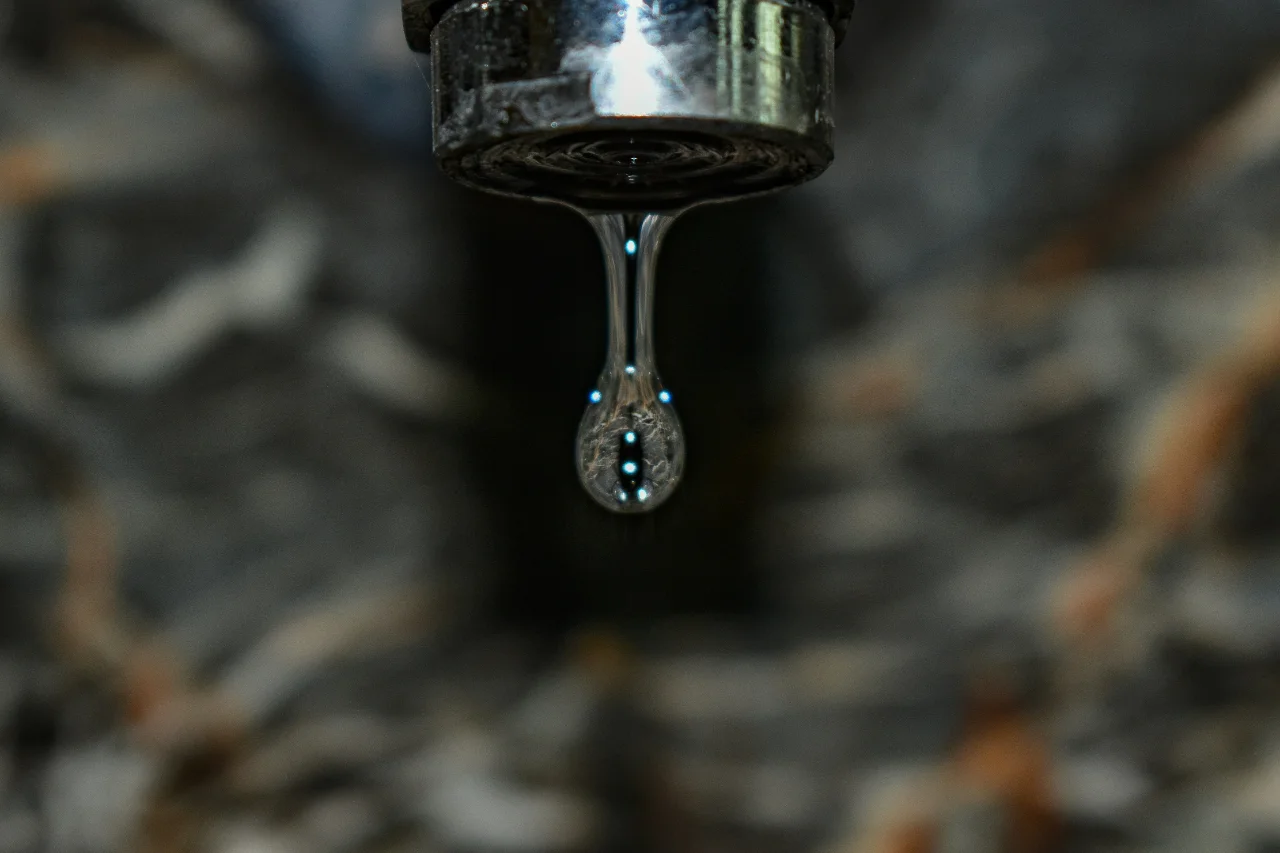
The truth is; despite the hyperbole surrounding these figures,the reproducibility crisis isn’t all that dramatic. It’s not a natural disasteror a catastrophic event; instead, it’s the relentless drip of a leaky tap,slowly rotting the floorboards as the damage compounds, drip by drip.
It’s an antibody that didn’t bind its intended target (36%), a poorly designed study that missed a crucial variable (28%), a copy/paste error between software and spreadsheet (26%), or perhaps a typing error left uncorrected in a regularly used protocol (11%)(1). The good news is that, like the metaphorical leaky tap, small changes can deliver big improvements. Think tightening connections as opposed to remodelling your bathroom, or worse - knocking down the house.
Digital simulations support better strategic planning
“I’ll just wing it” rarely works well for experiment design, particularly for complex genetic engineering projects. Luckily the days of manually printing, cutting and sticking sequences to test ligation or digest strategies are long gone. Instead, software solutions such as Lab Thread’s advanced molecular suite enable easy visualisation of the full DNA sequence, including open reading frames (ORFs), introns and restriction sites. What’s more, it can predict the outcome of restriction digest and ligation reactions using gel simulation, increasing the probability of success before committing time or reagents in the lab. This approach also works for DNA amplification via PCR and, once a target sequence has been identified, Lab Thread’s software will automatically design primers, with consideration to melting temperature, GC concentration, DNA secondary structure, and sequence uniqueness. PCR simulation then offers a digital prediction of the outcome ahead of any lab work.
Choosing the right reagents is critical for reducing waste
When a plumber comes to fix your dripping tap, their level of expertise and confidence is largely irrelevant if they brought the wrong sized spanner. Similarly, choosing the wrong reagents for an experiment can be equally disastrous, regardless of your technical skill.
Antibodies provide a great case study to exemplify this point. Ineffective or poorly validated antibodies are responsible for an estimated $1 billion of wasted research funding annually in the USA(2). This figure hides some nuance; some antibodies don’t work well. Some are not specific for the intended target. Some bind to off targets. Some may work well in certain applications, but not others; for example, an antibody validated in Western blots used for immunofluorescence or vice versa may see performance issues.
To help address this, researchers can draw on citation data to understand how products have performed in real experiments(3). CiteAb has spent over 14 years collecting evidence of reagent use from the scientific literature to provide researchers with the information they need to choose the right reagents for their experiments. CiteAb’s searchable database now contains over 13 million citations for 18 million research reagents from 715 suppliers, covering antibodies, biochemicals, cell lines and models, kits and assays, proteins, nucleotides and instruments, with application-specific data, images, third-party validation data and more.
Products within the database are ranked by citations, not by paid placement, so a highly cited product from a small supplier can outrank a less proven product from a major one. Researchers can also search published images to visually assess product performance before purchasing, again learning from their peers’ experience to increase the likelihood of their own experimental success.
Success bias delays scientific advancement
The inherent success bias of academic publications remains a major contributor to laboratory waste. Speaking to our antibody case study, if an antibody validated for Western blot is tested in an immunofluorescence assay and fails to perform, that data is unlikely to be published. How then should other researchers avoid repeating the mistakes of their peers? A lack of infrastructure or incentive to publish failed experiments and negative results causes drag within the scientific community. This is a significant conundrum with no real-world solution, but within organisations, platforms like Lab Thread; where records linking reagents, protocols and outcomes can be stored digitally, shared widely and made easily searchable using custom tags, can help prevent intra-team repetitions.
The element of surprise shouldn’t live in your freezer
In a perfect world, once an experiment is planned, and reagents carefully selected, there should be nothing in the way of positive (and reproducible) results. Sadly, this is rarely a scientist’s reality, (which probably explains the number of LinkedIn Cartoons depicting the life of a PhD student). Retrospective realisation of mistakes, or last-minute panic when a key reagent has run out, more often than not leave us wondering what the best bad decision should be. Is it better to abandon the experiment to save valuable samples, or to proceed with an alternative reagent, perhaps from a different supplier, batch, or passage number, knowing full well the likelihood of introducing unexpected variables and inconsistencies into the data?
Making sure to always check stock levels of all necessary reagents before an experiment, especially when sharing lab space and a freezer, is an obvious solution to this problem, but relying on humans (even scientists!) to always behave perfectly will never be foolproof. However, once again, technology solutions can mitigate this risk.
Lab Thread’s sample tracking and equipment monitoring LIMS module turns laboratory freezers from black boxes to searchable libraries, making it easy to spot when, where, how and by whom a sample has been used and whether it’s still in its expected place. In addition to simplifying inventory and sample management, this has financial and environmental benefits too, primarily in reducing the necessity for purchasing and running new equipment through better management of existing resources.
Tracking equipment testing and calibration records and service dates within the same LIMS system can further reduce waste and improve reproducibility by reducing unexpected downtime and avoiding inconsistencies caused by improperly calibrated equipment. The precise cost of unplanned equipment downtime in research laboratory settings is difficult to quantify, but it’s likely to contribute to the overall waste figure meaningfully once sample loss, repeated experiments, delayed results and labour costs / lost productivity are accounted for (4).
Record structure - as well as content - matters
There are hundreds of variables in any one experiment that may or may not impact its success. The temperature of the water bath, the CO2 level of the incubator, how long a sample incubated, or how vigorously it was stirred, for example. Some of these may not even register as variables, let alone be written down, especially for an experiment that’s performed day after day, week after week. And yet some of these variables will be responsible for an experiment working one day but failing the next. So, the experiment is repeated. Another variable is tested; another may be missed. This inconsistency costs. A standardised data capture template that streamlines the recording of routine lab processes, but with editable fields to record exact variables, ensures that not just the data, but the context surrounding each result, is collected and standardised. This way, it’s ready for AI (or a human with sufficient time and brain power) to analyse, interpret and identify exactly which variable is responsible for making an experiment work the first, second and fifth time it was repeated, but not the third or fourth.
Data storage: the final strand in the digital thread
At the heart of the reproducibility crisis lies a simple conundrum that every scientist is familiar with; repeating the same experiment, using the same reagents, and following the same protocol doesn’t always give the same results— for all of the reasons we’ve described above. A properly connected project file can make all the difference. Now, repeating an experiment is easier than just following a standard protocol. Instead, there’s a fully documented record of the original intent, experimental calculations and variables, exact batch, concentration and lot number of all reagents used, as well as the final result, analysis and sample location—a fully traceable roadmap for every experiment.
An opportunity to save
Reducing budget waste and improving reproducibility does not require a major scientific overhaul. Small changes—tightening up the connection between the pipe and the tap—can have a big impact. For example, in a well“plumbed” system:
● Reagents are selected with application-specific validation data
● Experiments are, where possible, modelled in silico in advance of any wet lab work
● Equipment maintenance is tracked and linked to experimental records, so that calibration status is never a confounding variable, and downtime is predictable
● Protocols are standardised and connected to outcomes, so variables are captured consistently
● The full research history is searchable — making it possible to identify what worked, reproduce it reliably, and build on it confidently
Digital solutions, like CiteAb and Lab Thread exist to make these changes not only possible, but easy to adopt without disrupting your existing workflow. And, like calling a plumber to fix a leaky tap, the sooner you do it, the more straightforward the remedy.
Tighten the connections between your research streams
References
1. Freedman LP, Cockburn IM,Simcoe TS (2015). The Economics of Reproducibility in Preclinical Research.PLOS Biology. DOI: 10.1371/journal.pbio.1002165
2. Ayoubi R, Ryan J, Biddle MS, Alshafie W, Fotouhi M, Bolivar SG, RuizMoleon V, Eckmann P, Worrall D, McDowell I, Southern K, Reintsch W, Durcan TM, Brown C, Bandrowski A, Virk H, Edwards AM, McPherson P, Laflamme C. Scaling of an antibody validation procedure enables quantification of antibody performance in major research applications. Elife. 2023 Nov 23;12:RP91645. doi:10.7554/eLife.91645. PMID: 37995198; PMCID: PMC10666931.
3. CiteAb: a searchable antibody database that ranks antibodies by the number of times they have been cited
4. Frost & Sullivan.(2018). Understanding Key Challenges and Pain Points in the Global Laboratory Market: Global Analysis. Market research conducted on behalf ofAgilent Technologies.